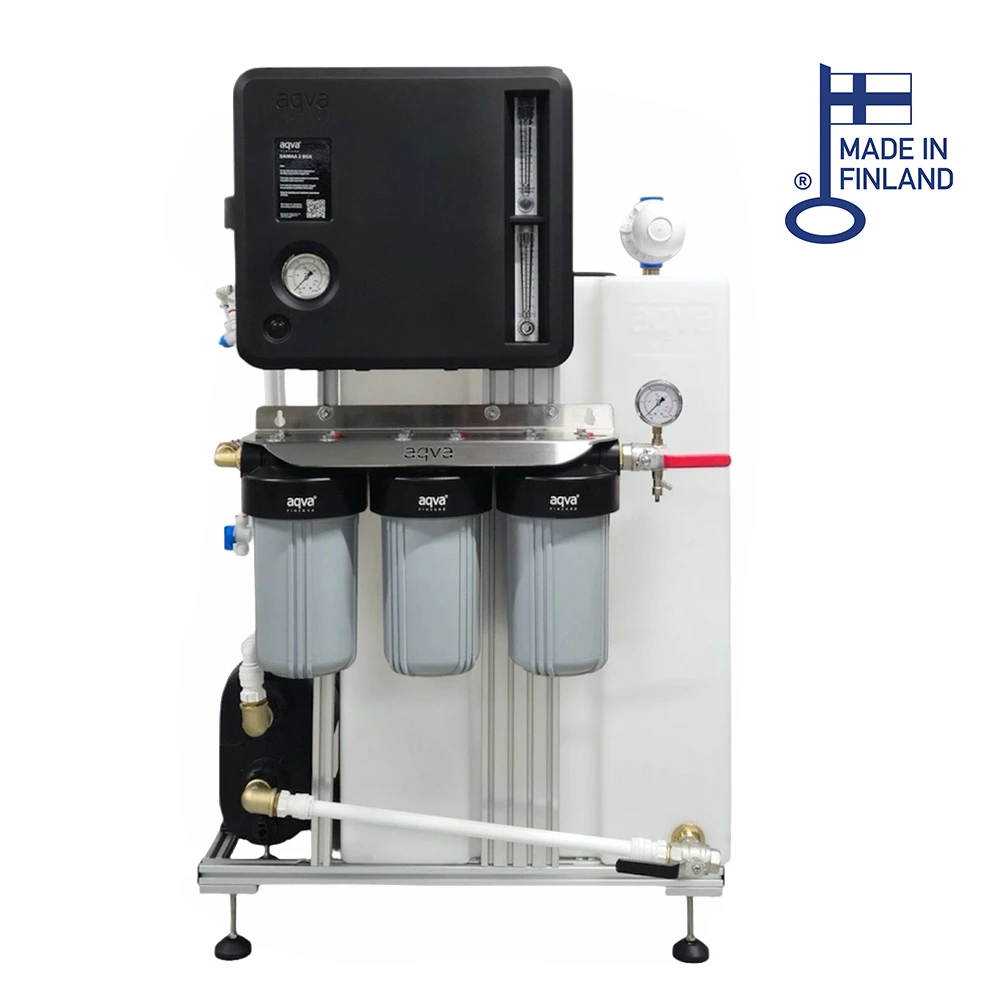
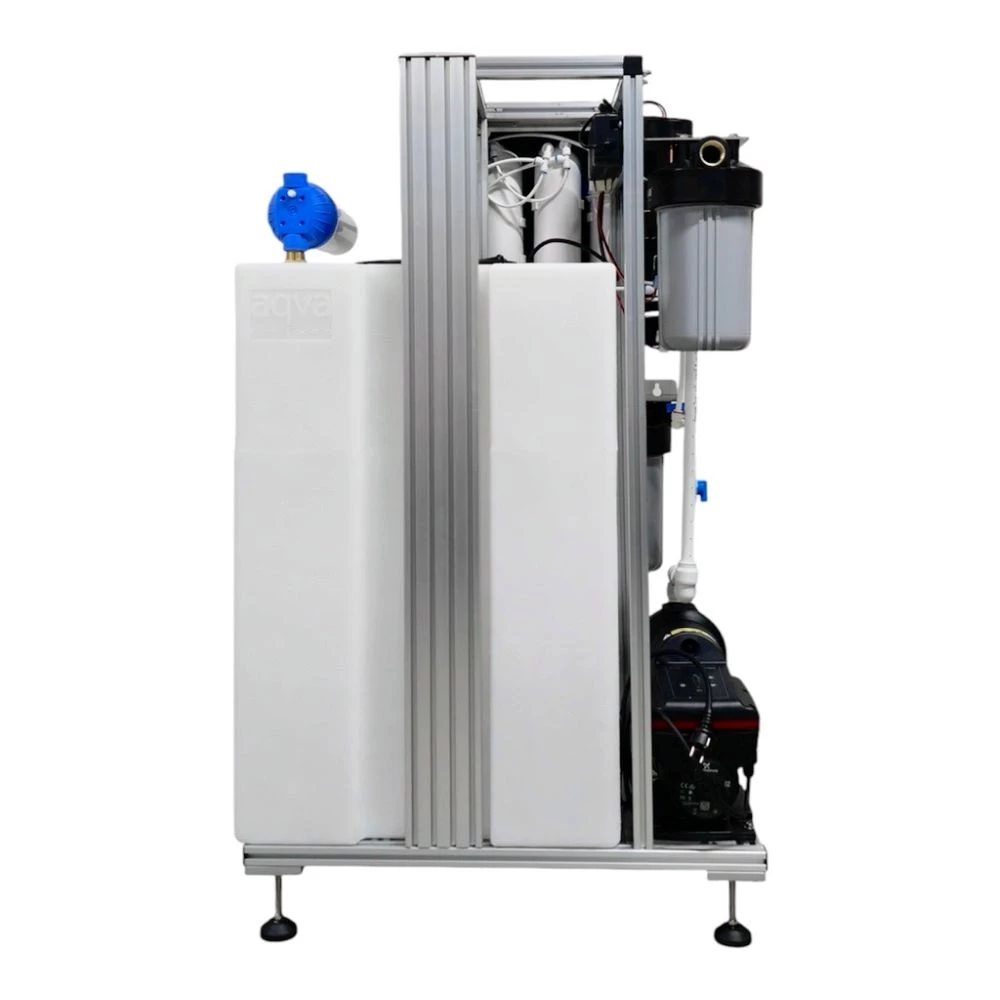
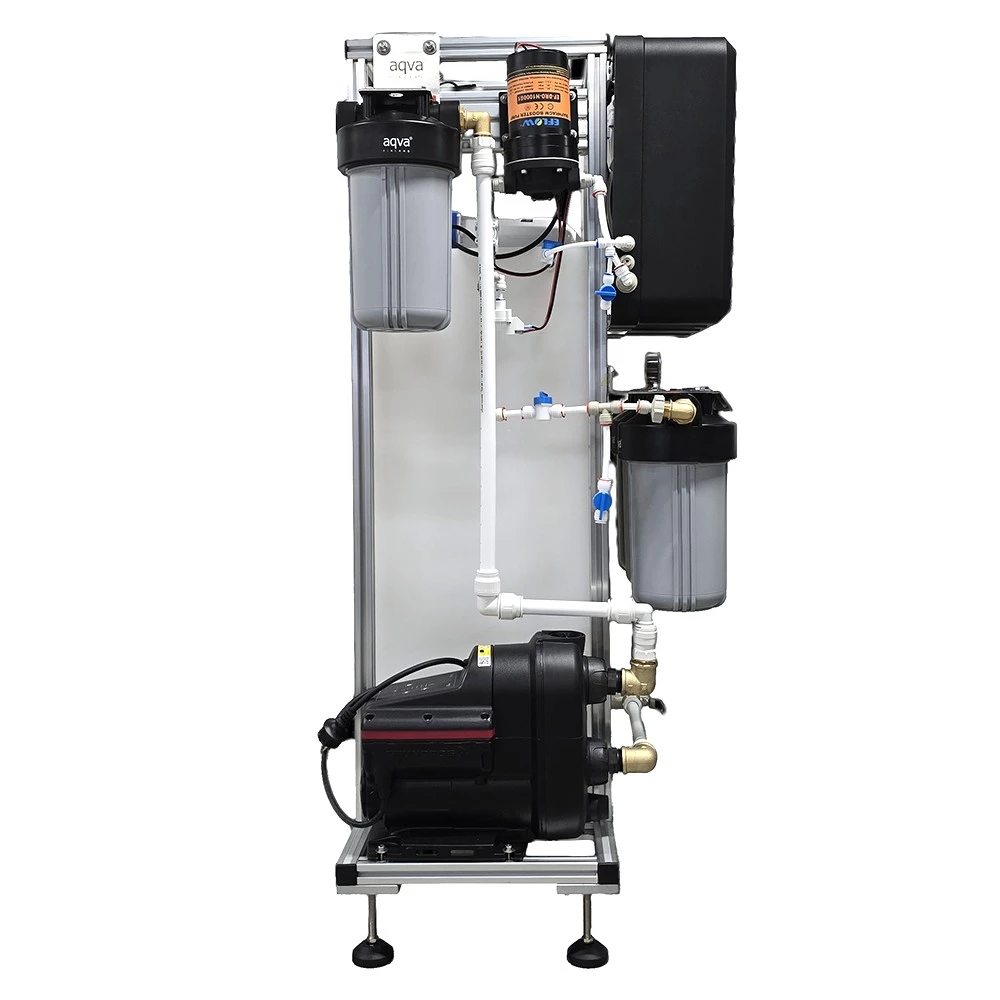
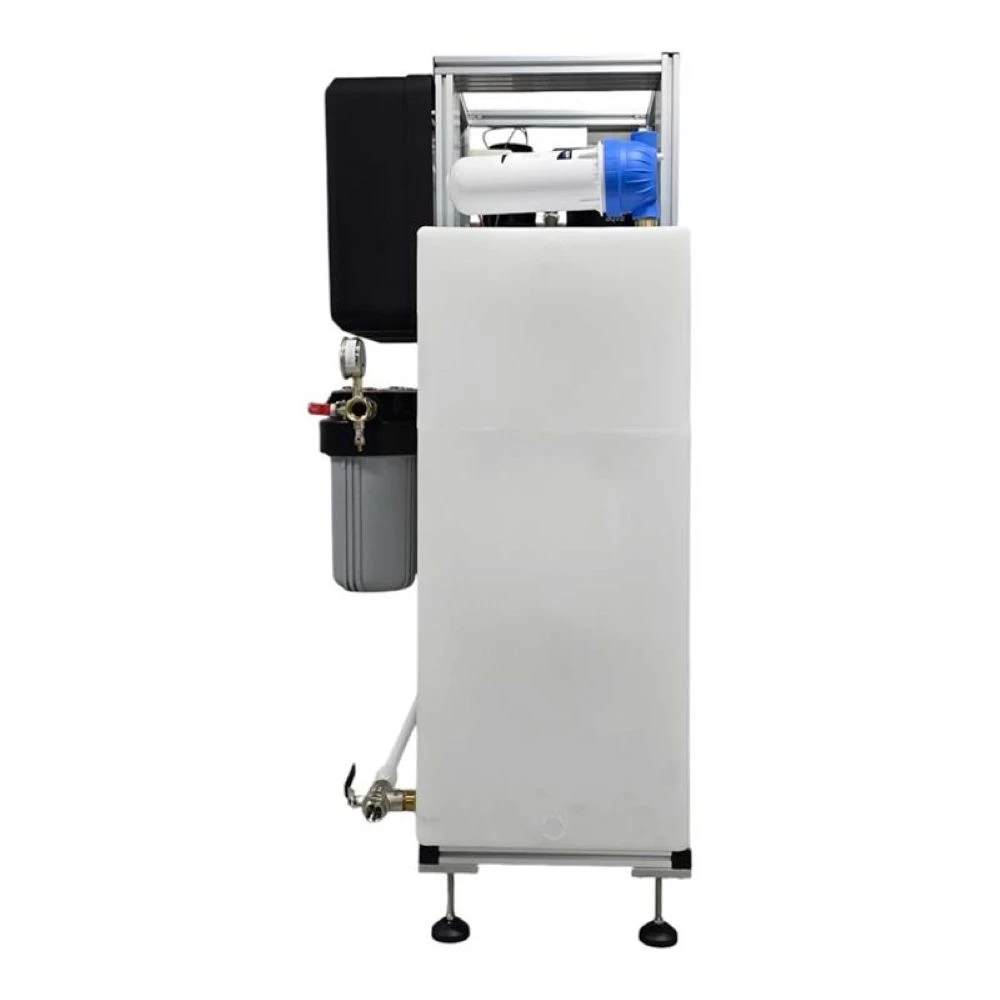
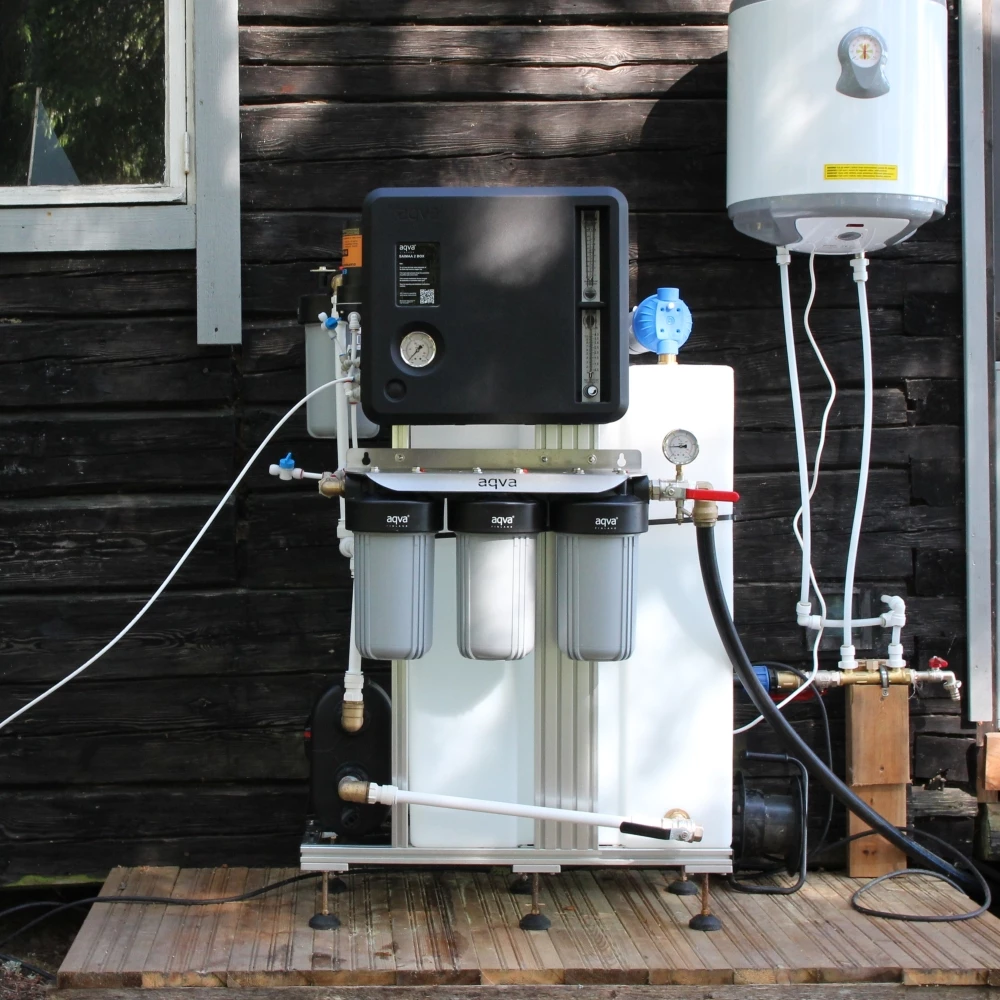
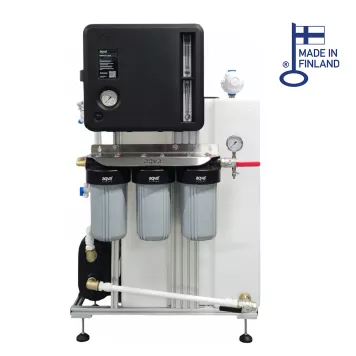
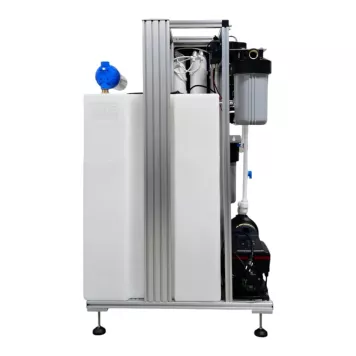
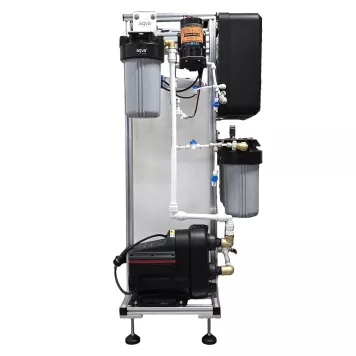
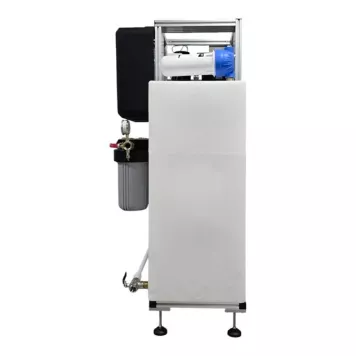
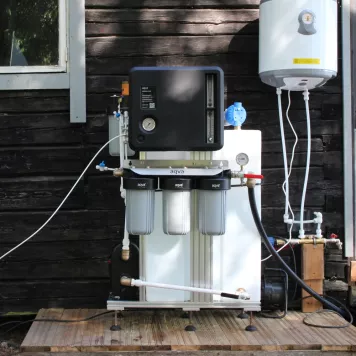
AQVA SAIMAA 2 SEA BOX ready-to-install reverse osmosis system for seawater
AQVA SAIMAA 2 SEA BOX reverse osmosis system.
Ideal for seawater and saline well water. This modular, ready-to-install system is easy to set up for homes, cottages, and holiday properties. Developed and manufactured in Finland, it offers a reliable solution for producing clean drinking water.
Efficient clean water production
Produces filtered water up to 36–60 liters per hour depending on operating conditions. Performance is affected by water quality, temperature, flush ratio, and feed pressure.
Reliable and durable design
Designed with reliability as a priority. The system contains no unnecessary electromechanical components or failure-prone additional technologies. No standby flushing – fewer components, fewer risks.
Pre-assembled – easy to install
Delivered fully assembled. Installation is as easy as installing a standard household appliance. The market’s smallest 0.54 m² footprint allows placement even in tight spaces. We recommend using an HVAC installer.
Suitable for seawater and well water
Turns seawater and saline well water into fully potable drinking water. Suitability of well water is verified through water analysis – available via AQVA’s own water laboratory.
185-liter integrated clean water tank
Sufficient for everyday use and high consumption peaks such as sauna evenings. Easily cleaned via the top service hatch. A 0.1 µm post-filter ensures hygienic water quality.
Energy-efficient and economical to use
The combined electricity consumption of the distribution pump and booster pump is on average only approx. 19.5 kWh per 1,000 liters. Energy consumption is mainly affected by water lift height.
Easy to maintain and adjust yourself
The flush ratio is easily adjusted via the reject screw without tools and can be checked from flow meters. All maintenance tasks can be performed independently without an HVAC installer.
Finnish – CE-marked Key Flag product
Manufactured in Finland in AQVA’s own production. A CE-marked reverse osmosis system awarded the Key Flag symbol. By choosing this product, you support Finnish work and expertise.
Benefits:
- Produces clear and clean water regardless of raw water quality
- Easy commissioning and installation
- Filters are easily accessible and replaceable
- Intermediate water tank is easy to service and clean
- Post-filtration ensures the quality of filtered water
- Reverse osmosis membranes last up to five years
Filtration and treatment stages:
- In the first stage, an L-size 1 µm fine filter removes visible and invisible particles down to 1 µm (1/1000 of a millimeter)
- In the second stage, water passes through an L-size carbon block filter removing organic compounds, metals, heavy metals, industrial chemicals, and gaseous impurities
- The third pre-filter is an L-size polyphosphate filter that protects and extends the lifespan of reverse osmosis membranes. Polyphosphate alters the structure of limescale and humus to prevent buildup in the system and membranes
- Thorough filtration is performed by reverse osmosis membranes, allowing only water molecules through and producing near-distilled quality water. Impurities are flushed away with reject water
- Before entering the tank, water passes through a post-mineralization filter, adding calcium and raising the pH level
- The distribution pump delivers water through a post-filter ensuring hygienic quality. The post-filter is fibrous activated carbon with 0.1 µm ultrafiltration
Removes from water:
- Solid particles
- Turbidity and color
- Odors and tastes
- Blue-green algae 99.9%
- Metals such as iron and manganese
- Humus
- Heavy metals such as lead, mercury, cadmium, and arsenic*
- Salts such as chloride**, sodium**, sulfates, nitrates, and nitrites
- Microbiological impurities such as bacteria, viruses, and molds
- Chlorine and other chlorine compounds
- Uranium
- Radon*** and hydrogen sulfide
* Arsenic is typically removed with over 85% efficiency, but in rare cases performance may be lower. ** Freshwater systems remove approx. 85% of salt (sodium and chloride). *** If water contains radon, note that the activated carbon filter may act as a radiation source. More information is available in the installation and user manual. Contact the seller if needed.
Replacement filters:
Pre-filters replacement interval 1–2 years:
Post-filters replacement interval 1–2 years:
Reverse osmosis membranes 1–3 years:
- Reverse osmosis membranes 2 x (AQ061-B)
Replacement intervals depend on water usage and raw water quality
Package contents:
- AQVA SAIMAA 2 SEA BOX modular reverse osmosis system
- Pre- and post-filters, air filter, reverse osmosis membranes
- Installation tubing: 10 meters of 1/4” hose and 4 meters of 3/8” hose
- Required installation fittings
- TDS pen meter
- Centering rings for pre- and post-filters
- Seal grease
- Housing wrenches
Technical specifications:
- Clean water production rate at 9 bar, Baltic Sea salinity and 21°C water up to 55 liters per hour*
- Water inlet connection 1” internal thread
- Water outlet connection to distribution 1” internal thread
- Dimensions: width 85 cm, depth 65 cm, height 137 cm
- Dry weight: 79 kg
- Operating weight: 340 kg
- The system must be installed in a space where possible water leaks will not cause damage
- The system produces more reject water than clean water. Recommended ratio is 2–3 liters of reject water per 1 liter of filtered water. The ratio can be adjusted from the built-in flow meter
- More information is available in the installation and user manual under the “Files” tab
* See the production rate table in the installation and user manual. Performance depends on water quality, temperature, and feed pressure.
System requirements
- Stable feed pressure 2–10 bar
- If pressure is below 3 bar, clean water production may be slow. Increasing feed pressure improves output
- Feed water temperature 4–30°C
- Minimum installation space temperature 5°C
Winter storage:
- The system must not freeze while containing water. However, it can be used in locations without winter heating. In such cases, proper winterization procedures must be performed. Detailed instructions are provided in the installation and user manual.
Suomalainen verkkokauppa