Well water testing

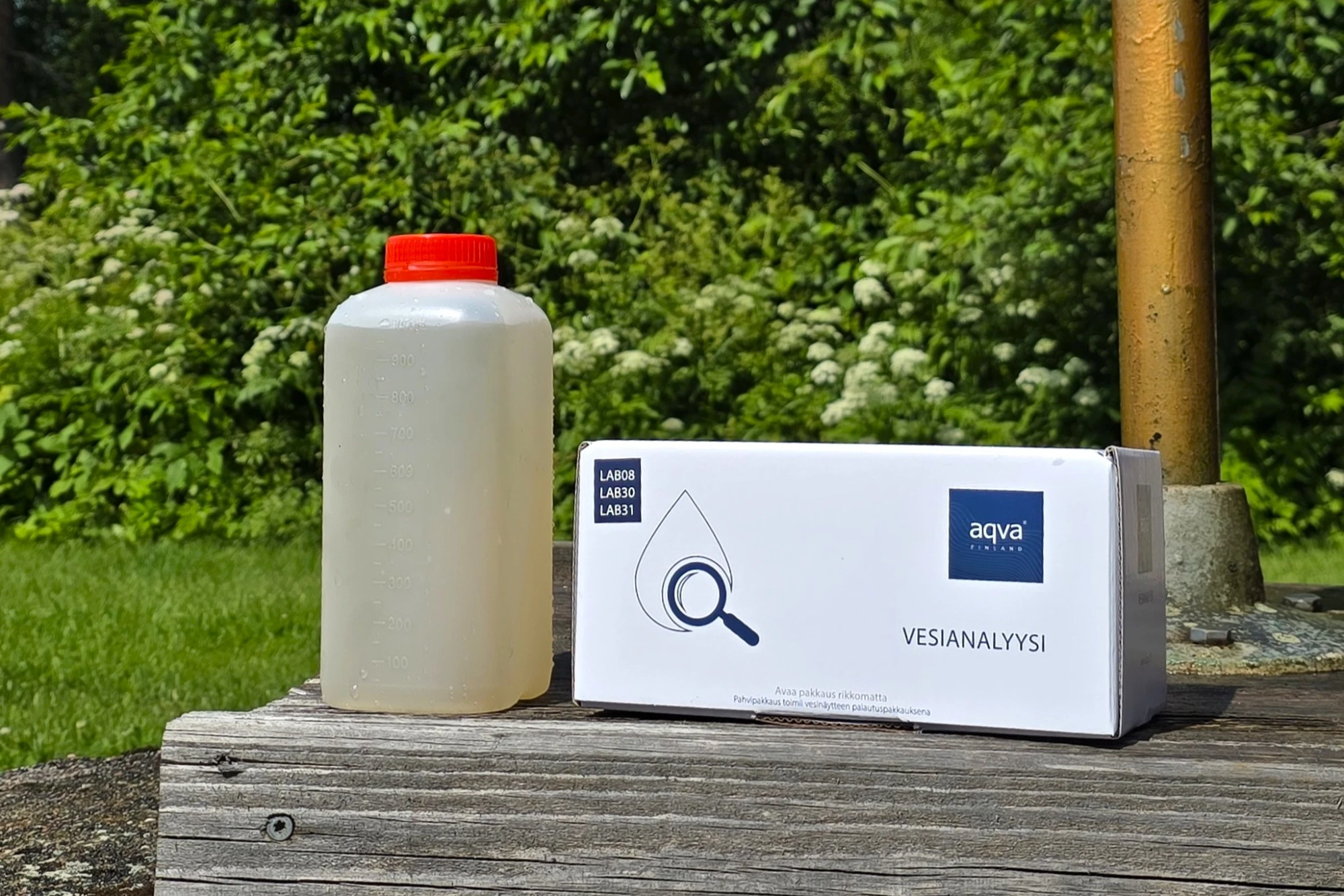
Examining well water with water analysis reliably indicates the quality of the water.
Well water comes from rainwater and meltwater that has soaked into the ground, so its quality can vary depending on the season and the environment. Therefore , it is worth testing well water regularly, approximately every 1–3 years , and whenever you notice changes in the smell, taste, or color of the water. It is recommended to conduct a more extensive analysis every five years. On this page you can find more detailed information on how and how well water is tested .
Well water analysis reliably tells you whether the water is drinkable and safe , as not all harmful substances or bacteria can be detected without laboratory testing. AQVA's well water analyses help identify potential contaminants and, if necessary, choose the right solutions to improve water quality.
When should well water be tested?

Well water should be tested regularly, as many contaminants are not detectable by the senses. In addition to regular testing, well water should always be tested in situations where changes are observed in the water , such as odor, taste or color. Below we have listed the most common changes observed in well water and possible causes for changes in water quality.
In the event of a potential risk of contamination, such as flooding, fertilization or a wastewater problem, the well water should be tested as soon as possible. Exceptional situations, such as construction or forestry work in the surrounding area, can also affect the well water. When the well water changes, only a water analysis can ensure the actual quality and impurities of the water.

AQVA BOX – Reverse osmosis unit for filtering lake, sea, and well water
Finnish online shop


AQVA Finland
Open on weekdays 09–17
010 321 5080 (Mon–Fri, 10:00–15:00)
myynti@aqva.fi
Business ID: 2351337-8